





Introduction
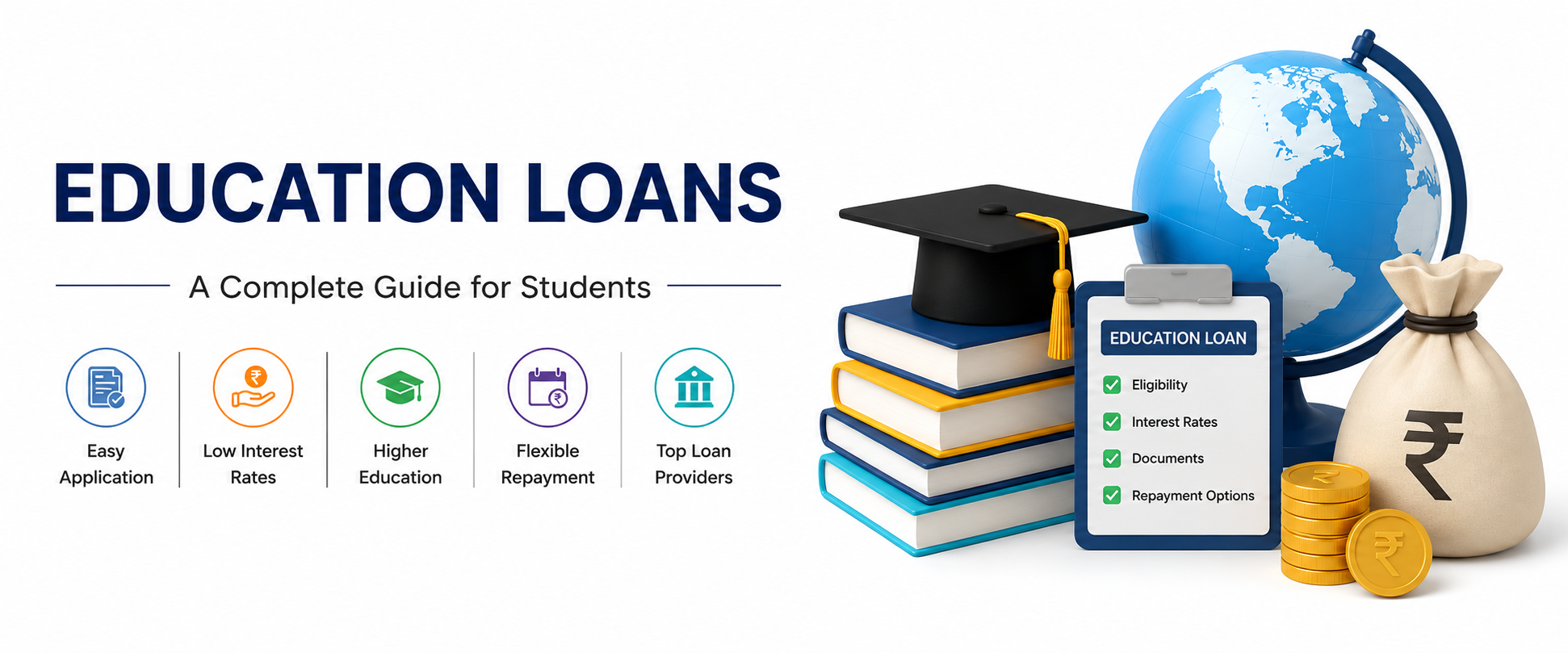
Higher education is one of the most valuable investments a student can make for a successful future. Whether pursuing a professional degree in India or studying at a prestigious university abroad, quality education often comes with significant financial commitments. Rising tuition fees, accommodation expenses, travel costs, and other educational expenditures can create financial challenges for students and their families. This is where education loans play a crucial role.
Education loans provide financial assistance that enables students to pursue their academic aspirations without exhausting family savings or compromising on the quality of education. Today, several government banks, private banks, NBFCs, and international lenders offer customized education loan solutions for domestic and overseas studies. This guide explores everything students need to know about education loans in India and abroad.
What is an Education Loan?
An education loan is a financial product designed to help students cover expenses related to higher education. These loans are offered by banks and financial institutions to support undergraduate, postgraduate, diploma, professional, technical, and doctoral programs in India and abroad.
The loan amount can be utilized for various educational expenses, including:
- Tuition fees
- Admission fees
- Examination charges
- Hostel and accommodation expenses
- Books and study materials
- Laptop and equipment purchases
- Travel expenses for overseas education
- Visa processing charges
- Insurance premiums
- Living expenses
Education loans ensure that students can focus on their studies while financial institutions manage the immediate educational costs.
Why Education Loans Are Important
Many families consider using personal savings to fund education. However, using all available savings can impact long-term financial goals such as retirement planning, home ownership, or emergency funds.
Some key advantages of education loans include:
- Preserving family savings and investments
- Access to quality education without financial burden
- Flexible repayment options
- Tax benefits under Section 80E
- Long repayment tenures
- Moratorium period during studies
- Opportunity to build a strong credit history
Education loans allow students to invest in their future while maintaining financial stability for their families.
Education Loans for Studies in India
Students pursuing higher education in India can apply for loans covering courses such as:
Eligible Courses
- Undergraduate degrees
- Postgraduate programs
- Engineering courses
- Medical programs
- Management studies
- Professional certifications
- Diploma courses
- PhD and research programs
Most banks require admission to institutions recognized by UGC, AICTE, NMC, PCI, or other approved regulatory authorities.
Education Loans for Studying Abroad
Studying abroad has become increasingly popular among Indian students seeking global exposure and enhanced career opportunities. However, international education involves substantial expenses beyond tuition fees.
Expenses Covered for Overseas Education
- University tuition fees
- Accommodation expenses
- Travel and airfare
- Visa charges
- Health insurance
- Books and study materials
- Living expenses
- Research and project costs
Leading lenders such as SBI, HDFC Credila, Avanse, Auxilo, InCred, Prodigy Finance, and MPower Financing offer specialized study abroad loan products.
Types of Education Loans
Education loans are generally classified into two categories
Secured Education Loans
Secured loans require collateral as security against the loan amount.
Accepted Collateral
- Residential property
- Non-agricultural land
- Apartments and houses
- Fixed Deposits (FDs)
- Life Insurance Policies
- Government Bonds
Benefits of Secured Loans
- Lower interest rates
- Higher loan amounts
- Longer repayment tenure
- Better approval chances
Students may obtain loans up to 1.5 crore or more for domestic and international studies through secured funding options.
Unsecured Education Loans
Unsecured loans do not require collateral and are sanctioned based on:
- Academic profile
- University ranking
- Future earning potential
- Co-applicant's financial profile
- Credit score
Benefits of Unsecured Loans
- No property mortgage required
- Faster approval process
- Minimal documentation
- Suitable for students without assets
Many lenders offer unsecured education loans up to 75 lakh or more for deserving students admitted to top-ranked institutions.
Education Loan Eligibility Criteria
Student Eligibility
Most lenders require applicants to:
- Be Indian citizens
- Be between 18 and 35 years of age
- Have confirmed admission to a recognized institution
- Maintain a strong academic record
- Meet course-specific requirements
Co-Applicant Eligibility
Since most students do not have a stable income, lenders require a co-applicant such as:
- Parent
- Guardian
- Spouse
- Sibling (in certain cases)
The co-applicant should have:
- Stable income source
- Good repayment capacity
- Strong credit history
- CIBIL score above 700
Factors That Improve Loan Approval
Several factors influence education loan approval:
Academic Performance
Strong marks in school and college indicate a higher likelihood of academic success and future employment.
University Ranking
Admission to reputed universities significantly improves loan eligibility.
Entrance Examination Scores
Scores in exams such as:
- IELTS
- TOEFL
- GRE
- GMAT
- SAT
- ACT
can strengthen loan applications for overseas studies.
Co-Applicant Profile
A financially stable co-applicant with a good credit score enhances approval chances.
Education Loan Process
The education loan process typically involves the following stages:
Step 1: Application
The student submits a loan application along with the required documents.
Step 2: Evaluation
The lender evaluates:
- Academic records
- Admission status
- Financial profile
- Collateral (if applicable)
Step 3: Approval
Upon successful verification, the lender sanctions the loan amount.
Step 4: Disbursement
Funds are disbursed directly to the educational institution according to the fee schedule.
Step 5: Moratorium Period
Students generally do not have to begin full repayment during the course period.
Step 6: Repayment
Repayment usually starts:
- Six months after employment, or
- One year after course completion
depending on lender policies.
Documents Required for Education Loans
Student Documents
- Aadhaar Card
- PAN Card
- Passport
- Academic transcripts
- Entrance examination scores
- Admission letter
- Fee structure
- Passport-size photographs
Co-Applicant Documents
- Identity proof
- Address proof
- Salary slips
- Income Tax Returns
- Bank statements
- Form 16
Collateral Documents (If Applicable)
- Property title deed
- Valuation report
- Tax receipts
- Encumbrance certificate
- Fixed Deposit receipts
Proper documentation ensures faster loan processing and approval.
Key Benefits of Education Loans
Moratorium Period
Students can focus on academics without immediate repayment obligations.
Flexible Repayment Tenure
Most lenders offer repayment periods of up to 15 years.
Tax Benefits
Under Section 80E of the Income Tax Act, borrowers can claim deductions on interest paid for up to eight consecutive years.
Female Student Benefits
Many government banks provide interest rate concessions of up to 0.5% for female students.
Pre-Visa Disbursement
Students can demonstrate financial capability during visa applications through pre-visa loan sanction and disbursement.
How Education Loans Help Build Credit Scores
Education loans can contribute positively to a student's financial future. Regular EMI payments help establish a strong credit history and improve credit scores.
Benefits of maintaining a good credit score include:
- Easier approval for future loans
- Better interest rates
- Improved eligibility for credit cards
- Stronger financial credibility
Responsible loan repayment builds a solid financial foundation for long-term success.
Choosing the Right Education Loan
Before applying, students should compare:
- Interest rates
- Loan amount limits
- Processing fees
- Repayment flexibility
- Moratorium benefits
- Collateral requirements
- Prepayment charges
Government banks often offer lower interest rates, while private banks and NBFCs may provide faster processing and greater flexibility.
Conclusion
Education loans have become an essential financial tool for students pursuing higher education in India and abroad. As educational expenses continue to rise, these loans provide access to quality learning opportunities without placing excessive financial strain on families. With benefits such as flexible repayment options, tax deductions, moratorium periods, and extensive expense coverage, education loans empower students to focus on academic success and career growth.
Whether you are planning to study in India or pursue a degree at a globally recognized university, understanding the education loan process, eligibility criteria, documentation requirements, and repayment structure can help you make informed financial decisions. By choosing the right lender and managing repayments responsibly, students can unlock academic opportunities and build a strong financial future simultaneously.